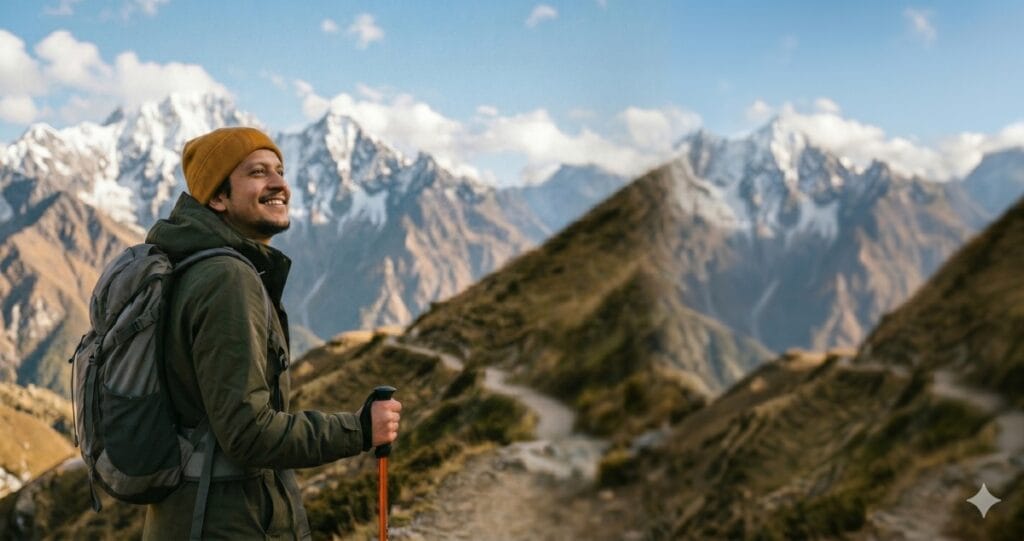
I’ve stood at 5,600 meters with my lungs burning and my head pounding like a bass drum. I’ve watched strong, fit athletes collapse at altitude while experienced climbers who trained smart powered on. From my personal experiences of hiking and mountaineering in the Upper Himalayas, which houses the highest mountains in the world, I’ll tell you this plainly: acclimatization isn’t optional — it’s survival.
Whether you’re heading to Everest Base Camp, en route to Kailash Yatra, traversing Ladakh, or venturing to any destination above 3,500 meters in height “above mean sea level”, here’s exactly what to do before and during your adventure to stay safe and actually enjoy the climb.
What High Altitude Actually Does to Your Body
Above 2,500 meters, the air gets thinner. Your body takes in less oxygen per breath, triggering a cascade of responses — faster heart rate, quicker breathing, and reduced blood oxygen saturation. If your body can’t adapt fast enough, you risk:
- AMS (Acute Mountain Sickness): Headaches, nausea, dizziness
- HACE (High Altitude Cerebral Edema): Dangerous fluid buildup in the brain
- HAPE (High Altitude Pulmonary Edema): Fluid in the lungs — often silent until it’s severe
These aren’t rare. They happen to fit, young, healthy people. The cause isn’t your fitness level — it’s how well you’ve prepared your body to adapt.
How to Acclimatize Before Your Adventure
Start Training 3–4 Months Out
At Shivam Yoga Centre, we combine breathwork, cardiovascular conditioning, and strength training to prepare trekkers for altitude. Here’s what genuinely works:
- Cardiovascular base training: Run, cycle, or swim 4–5 days a week to build VO2 max
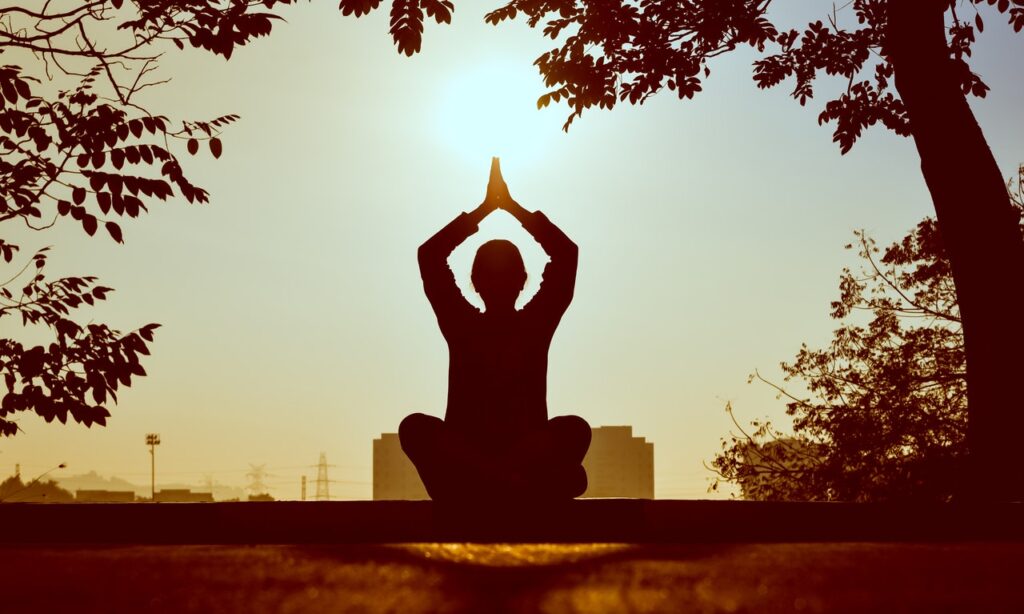
- Pranayama and breath control: Kapalbhati, Anulom Vilom, and Bhramari train your respiratory muscles and improve oxygen efficiency — this is more powerful than most people realize
- Strength training: Legs, core, and posterior chain — you’ll need every bit of it on rocky terrain
- Sleep at elevation: Spend weekends at higher altitudes in the weeks before your trek if geography allows
Pre-Departure Essentials
- Get a full medical check-up — cardiac and respiratory conditions must be disclosed
- Speak to your doctor about Acetazolamide (Diamox) — it helps your kidneys adjust blood chemistry for altitude
- Avoid alcohol and sedatives the week before departure — both suppress your respiratory drive
During the Climb: Rules You Cannot Ignore
Follow the “Climb High, Sleep Low” Rule
This is non-negotiable. During the day, you can push higher, but always descend to sleep at a lower elevation. This gives your body overnight hours to produce more red blood cells and adapt.
Safe ascent rate: Never gain more than 300–500 meters of sleeping elevation per day above 3,000 meters.
Spot the Warning Signs of HACE and HAPE
Stop and descend immediately if anyone in your group shows:
- Severe headache unresponsive to ibuprofen or paracetamol
- Loss of coordination, stumbling, or sudden confusion (HACE)
- Persistent dry cough, breathlessness at rest, or pink frothy sputum (HAPE)
- Extreme fatigue far beyond normal exertion
The golden rule: when in doubt, descend. You can always go back up. You cannot undo a cerebral bleed.
Nutrition at Altitude: Fuel Your Climb Properly
Your appetite drops at altitude, but your caloric demand increases. That gap is where people get into trouble.
- Carbohydrates first: Complex carbs metabolise faster at altitude and are your primary fuel. Oats, rice, whole-grain bread, and potatoes are your friends.
- Easy proteins: Lentils, eggs, and small portions of lean meat support muscle recovery overnight
- Avoid heavy fats early on: High-fat meals are genuinely harder to digest when your gut is under altitude stress
- Eat small, frequent meals every 2–3 hours rather than large, heavy sittings
Hydration Strategy: Ignore This at Your Peril
Cold, dry mountain air causes rapid fluid loss through breathing alone — even when you don’t feel thirsty. Dehydration dramatically accelerates altitude sickness.
- 3–4 liters of water daily, minimum — more if you’re exerting hard
- Add electrolytes or ORS sachets to at least one bottle per day
- Warm fluids — soups, herbal teas, and broths — are particularly effective at altitude
- Cut caffeine and alcohol — both are diuretics that will dehydrate you faster than you think
Final Word from the Trail
High altitude is humbling, beautiful, and absolutely unforgiving. But with a strong aerobic base, disciplined breathwork, smart ascent planning, and the right nutrition, you’ll acclimatize efficiently and dramatically cut your risk of serious illness.
At Shivam Yoga Centre, we run specialised high-altitude fitness programs that blend pranayama, performance training, and holistic conditioning to prepare adventurers for exactly this.
Ready to train for your next summit? Visit sycyoga.com and let’s build your altitude-ready body.
Meta Title: High Altitude Acclimatization Guide for Trekkers
Meta Description: Learn how to safely acclimatise to high-altitude adventures, prevent HACE & HAPE, and follow the best nutrition and hydration plan. Expert mountaineer tips.